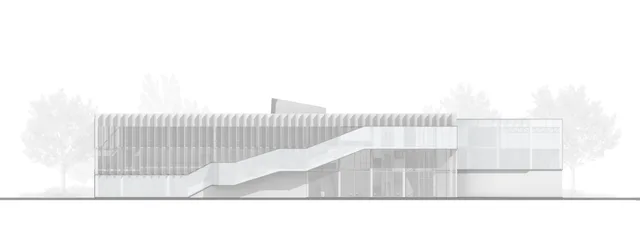
The project uses Ubari as a site case to explore a public care and education institution for post-conflict desert cities. Ubari is an oasis town in the Fezzan region of south-western Libya, located within the Idehan Ubari, a Libyan part of the Sahara Desert.
The town has been affected by conflict, which has disrupted local life and reduced access to stable education, care, and shelter. Many school-age children in similar desert settlements face limited learning environments and a lack of safe communal spaces.
The project proposes an educational facility that responds to both social needs and desert climate conditions. It uses local materials, passive environmental strategies, and available natural resources to reduce construction costs, support long-term use, and lower the impact on the surrounding landscape.
By combining learning, shelter, and community care, the project aims to create a resilient place for children and local residents. It offers a model for how architecture can support education, wellbeing, and recovery in fragile desert contexts.